Meme Coin Trading Rules From Five Years Of Experience
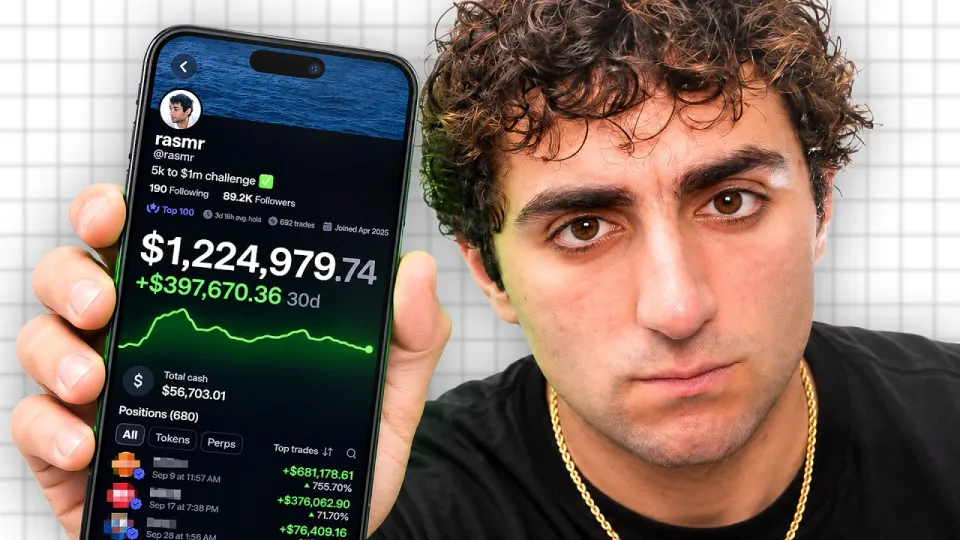
Video: 5 Years of Memecoin Knowledge in 12 Minutes
Want articles like this for your own video to promote it on YouTube and Google? Order them through the Telegram bot @sat_sit_bot. It writes articles around your video, embeds the video and publishes them on popular niche websites (no ads). Free trial — 50 articles.
· based on the channel rasmr
Key takeaways
- Meme coins are narrative-driven: who launched the token and why matters more than the chart pattern.
- Most retail exits cluster at familiar market-cap milestones, so plan sells before the pump starts.
- Emotional trading — averaging into a loss or round-tripping a 50–100% gain — is the most common account killer.
- Small starting capital and a fixed position size beat oversized bets taken on excitement.
- Early access to launches usually comes from private groups, not from public charts.
A meme coin is a cryptocurrency whose value rests almost entirely on community attention and narrative rather than on cash flow, revenue or a product roadmap. Trading them profitably is less about predicting charts and more about understanding who launched the token, why it exists and at what market capitalization the crowd tends to sell. The practical playbook below distills the lessons from rasmr's five-year retrospective, and if you want to trade alongside that workflow you can register on FOMO through the rasmr referral link.
What actually drives a meme coin price
Price in this niche is a function of narrative and distribution, not fundamentals. A token tied to a live trend, a recognizable figure or an inside joke can multiply within hours, while an identical contract with no story dies in silence. The key questions before any entry are who released the token, which audience it targets and whether that audience is already active on the platforms where the coin is being pushed. Liquidity matters just as much: thin pools mean your own sell order can move the price against you, and a token that looks cheap on a chart may be impossible to exit at size.
Reading market cap instead of chart patterns
Experienced traders watch market capitalization milestones rather than candlestick shapes. Retail crowds tend to take profit at round numbers — a few hundred thousand, one million, ten million — and those levels behave like ceilings until fresh money arrives. Mapping the likely exit zones before buying turns a chaotic chart into a simple plan: define the entry, the target cap and the invalidation point in advance. If a coin has already run from a low cap to a widely shared milestone, the remaining upside is smaller and the queue of sellers is longer.
The emotional traps that erase gains
The most expensive mistakes in meme coin trading are behavioral, not analytical. Common failure modes reported by traders include:
- Refusing to accept a loss and hoping the chart recovers, which turns a small drawdown into a large one.
- Round-tripping an unrealized gain of 50–100% because the position felt like it would keep going.
- Buying the top out of excitement after seeing a green candle, with no plan for where to sell.
- Oversizing a position so that normal volatility forces a panic decision.
A written exit plan — partial sells at predefined caps, a hard stop on the thesis, no averaging down without new information — removes most of these decisions from the heat of the moment. Holding a large paper profit and never taking any of it off the table is the same error as chasing a pump: both assume the market owes you a better price.
Position sizing and starting small
Survival in this market depends on capital allocation more than on picking winners. A trader starting with limited funds should treat each meme coin position as money that can go to zero, cap total exposure to a small share of the portfolio and scale up only after a documented track record. Taking profits in tranches — for example selling a portion at the first cap milestone and letting the rest run — keeps the process repeatable regardless of whether any single token moons.
Where early access really comes from
Being early on a launch rarely happens through public charts. It comes from private groups and tightly connected circles where a token is discussed before it is broadly announced, which is why insiders often exit into the crowd that discovers the coin later. That structure is worth understanding even if you never join such a group: it explains why a token can spike on day one and bleed afterward, and why the person telling you about a launch may already be positioned. Treat any invitation to an "inner circle" with the same skepticism you apply to a token contract.
Typical questions traders ask about meme coins
Newcomers usually want to know how to spot a rug, when to sell and how much to risk. On rugs, the warning signs are concentrated holder supply, unlocked liquidity, anonymous teams with a history of abandoned launches and marketing that promises returns instead of explaining the token. On selling, the answer is almost always mechanical: set target market caps in advance and take partial profits rather than waiting for a feeling. On risk, the rule is that no single meme coin should be able to end your account, and a first month of trading is a tuition period, not a payday.
Conclusion
The meme coin market rewards preparation and punishes impulse: narrative and launch provenance decide whether a token moves, market-cap milestones decide where the crowd sells, and position sizing decides whether you survive long enough to benefit. rasmr's five-year review makes the same point from the other direction — the traders who last are the ones who plan exits before entry and keep emotions out of execution. If you want to put that framework into practice, sign up on FOMO via the rasmr link and follow the channel rasmr for further breakdowns.
Useful links
Questions & answers
How do I tell if a meme coin is likely to rug?
Look at holder concentration, whether liquidity is locked, and who is behind the launch. Anonymous teams with a trail of abandoned tokens, marketing that promises returns and a supply held by a handful of wallets are the classic warning signs. If you cannot explain why the token exists beyond the price going up, treat it as a lottery ticket rather than an investment.
When should I take profit on a meme coin?
Before you buy, define the market-cap levels where you plan to sell and execute in tranches rather than in one order. Crowds tend to sell at round milestones, so those levels often act as resistance. Holding a large unrealized gain without selling any portion is one of the most common ways traders give everything back.
How much capital should a beginner risk?
Only an amount you can afford to lose entirely, and small enough that a single loss does not change your decisions. Starting with limited capital is an advantage because mistakes are cheap and the process still gets tested. Scale position size only after a documented record, not after one lucky trade.
Is joining a private launch group worth it?
Private groups can provide earlier information, but they also create conflicts of interest because members may already hold the token they are promoting. Understand that insiders typically exit into later buyers, and never let group hype replace your own checks on liquidity, supply and narrative.
Source: 5 Years of Memecoin Knowledge in 12 Minutes · Markdown version